
Takada
Most card games are iterated based on intuition: designers playtest, tweak mechanics, and repeat until the game feels balanced. For my Bachelor's Thesis, I wanted to explore a different question:
What if emotions became the primary design metric?
Instead of evaluating mechanics only by balance or complexity, I investigated whether Emotional Design principles could guide the creation and validation of game mechanics.
To answer this, I designed an original golf-inspired card game and used it as the research artifact throughout the study.
The Challenge
Designing a strategy card game requires balancing multiple variables simultaneously. Players should feel challenged, but never overwhelmed. Luck should create excitement without removing player agency. The game should remain accessible to beginners while still rewarding experienced players. The central challenge became:
How can emotional responses be intentionally designed and measured to validate game mechanics?
Research
The project combined literature review with iterative game development. The theoretical foundation was built around Emotional Design (Norman, Desmet, Jordan), Game Design (Jesse Schell), player motivation (Nicole Lazzaro), and Richard Garfield's work on balancing luck and skill. Based on these frameworks, I established emotional goals before designing mechanics.
Desired emotions included:
Fun
Excitement
Satisfaction
Social interaction
Undesired emotions included:
Boredom
Indifference
Instead of asking only whether mechanics worked, I evaluated whether they generated the intended emotional experience.
Design Process
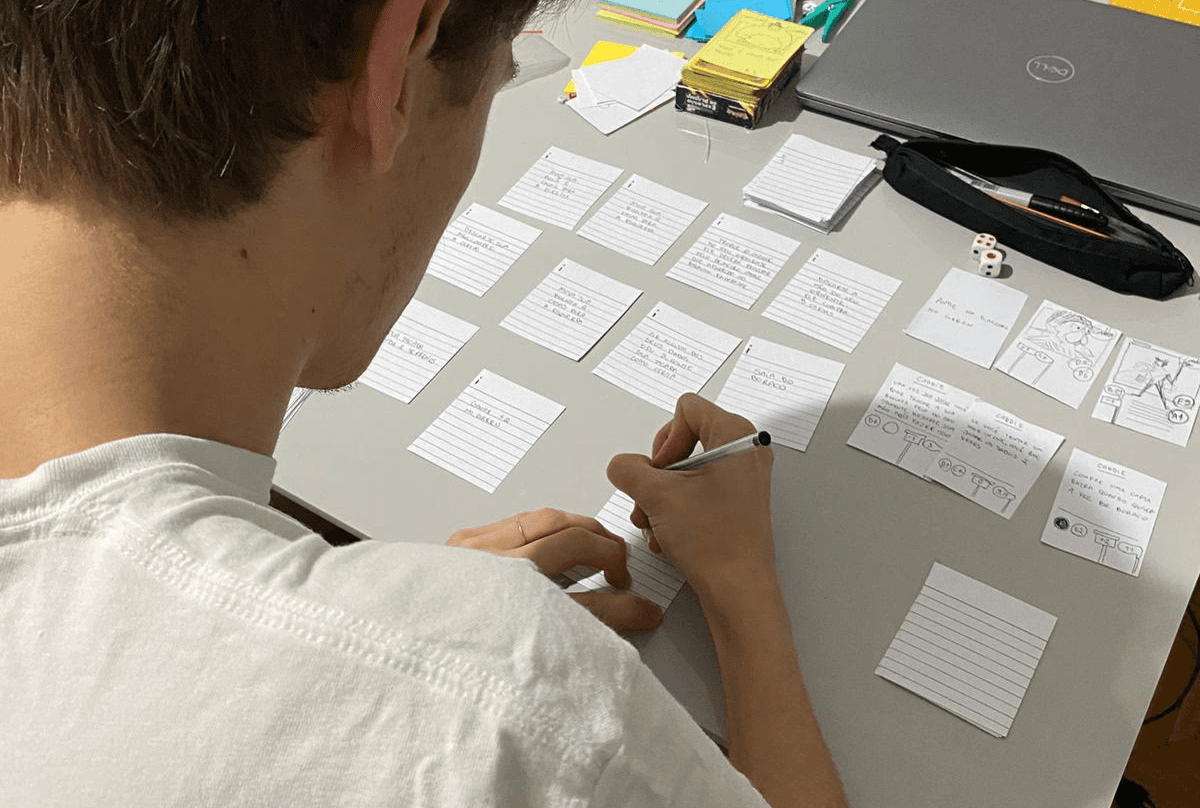
The project evolved through multiple prototype iterations.
Early versions relied almost entirely on dice rolls, making outcomes feel overly dependent on luck. Playtests quickly revealed that players lost engagement because their decisions had little impact.
This insight led to a redesign of the game's core mechanic.
Players now combine coordinate cards (strategic choice) with dice validation (uncertainty), creating a balance between skill and randomness.
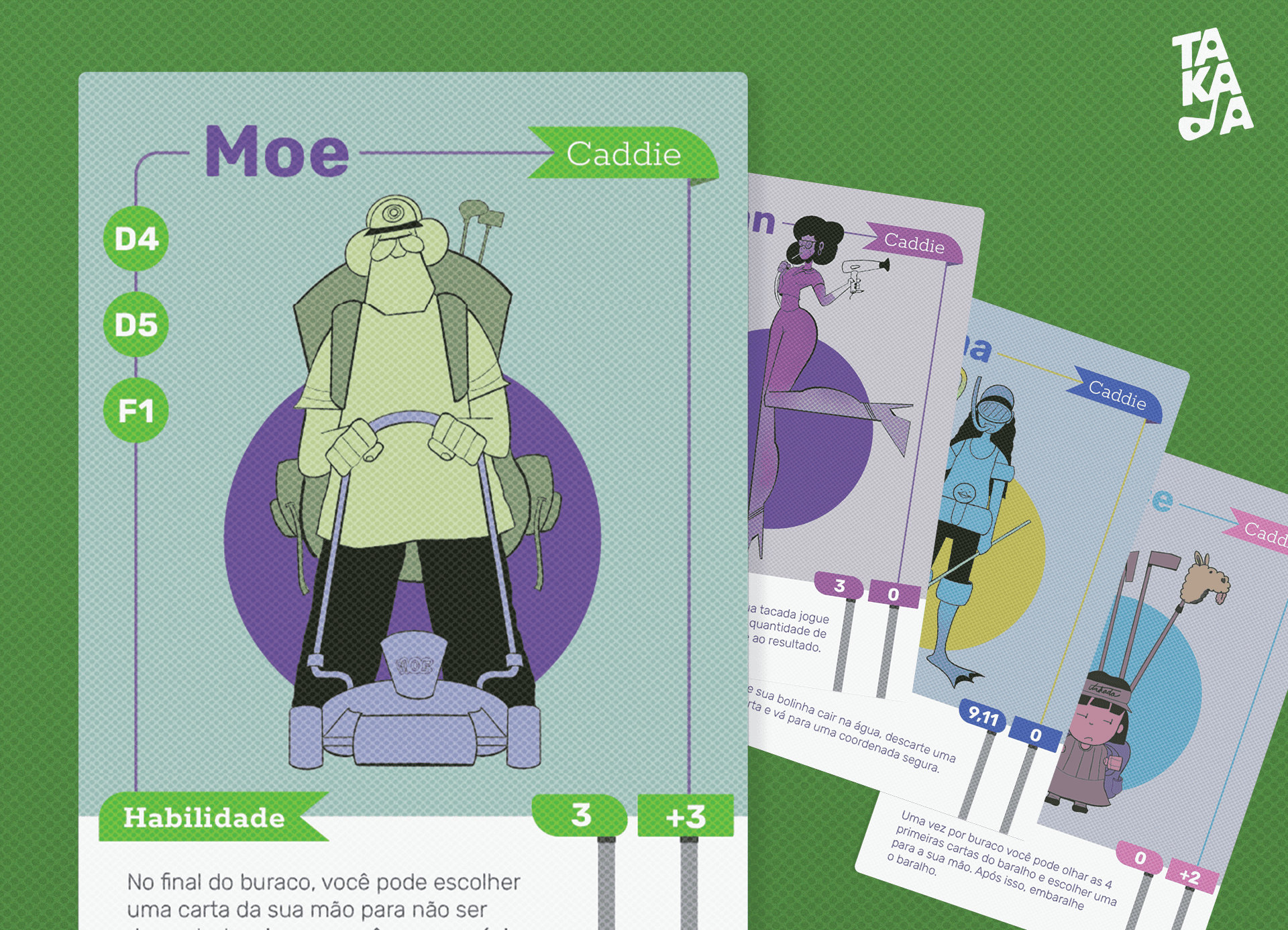
Additional mechanics—including character cards (Caddies) and item cards—expanded strategic depth without significantly increasing cognitive load.

Playtesting & Validation
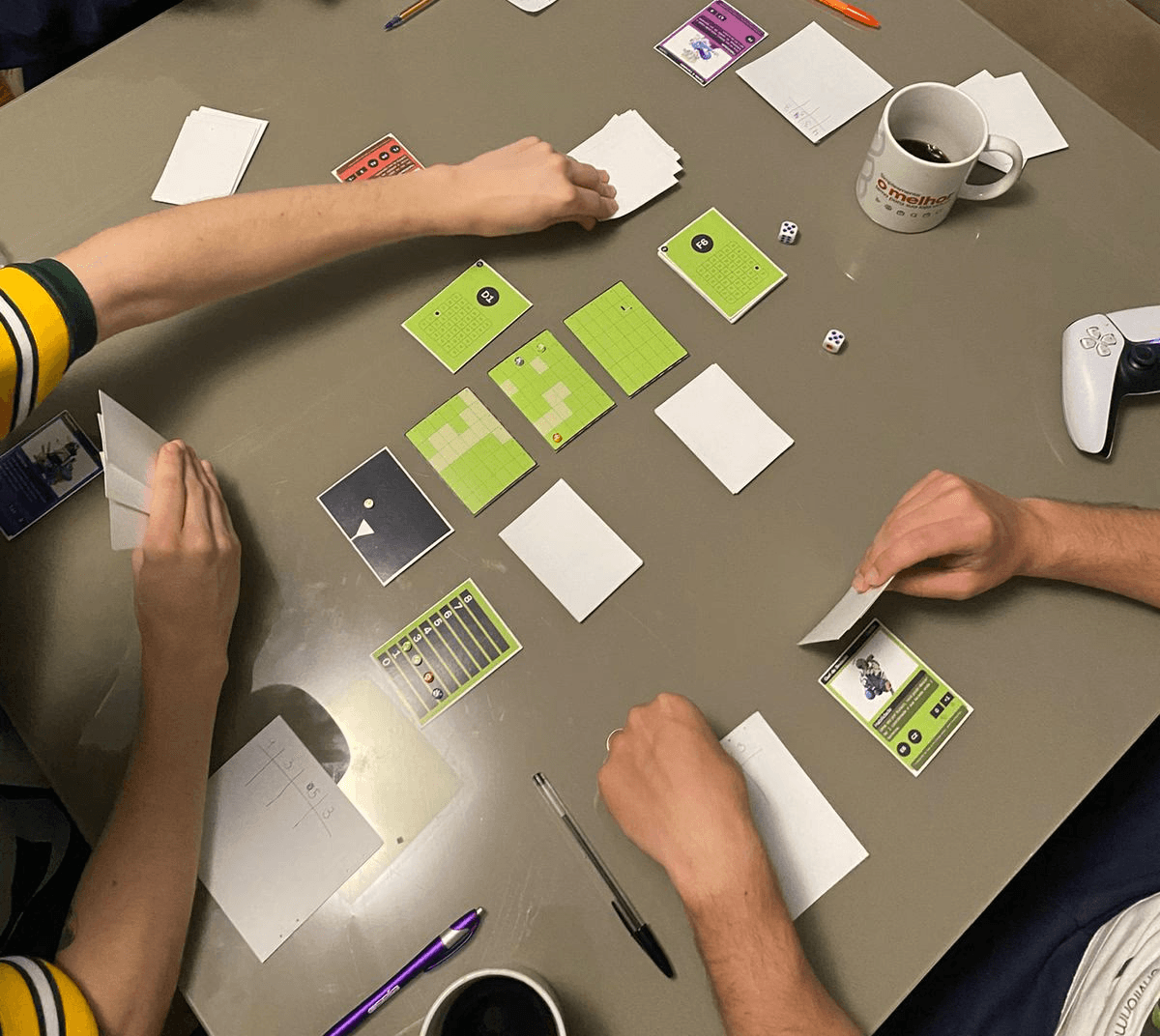
The prototype was tested with 14 participants divided into two groups:
Experienced card game players
Casual players
Each session combined direct observation, qualitative interviews, and post-game surveys measuring comprehension, engagement, perceived control, and emotional responses.
The objective wasn't simply identifying broken mechanics, but understanding how players emotionally reacted throughout gameplay.
Results
The findings showed that the emotional-first design approach successfully guided mechanic validation.
Key outcomes included:
85% of participants found the rules easy to understand.
Players consistently perceived a healthy balance between luck and strategic decision-making.
None of the participants reported boredom—the primary emotion the project aimed to eliminate.
92% reported feeling enjoyment during gameplay.
Emotional highs repeatedly emerged through shared moments of tension, celebration, and social interaction around the table.
One particularly interesting observation was how failed dice rolls created temporary frustration, which later transformed into collective celebration when players finally succeeded—producing exactly the emotional "rollercoaster" the project intended to create.
Final Solution
The project resulted in a fully playable golf-inspired card game whose mechanics were intentionally designed around emotional outcomes rather than purely mathematical balance.
More importantly, the research demonstrated that Emotional Design can function as a practical framework for validating game mechanics throughout the design process.
Instead of treating emotions as a by-product of gameplay, they became measurable design objectives that informed iteration decisions.

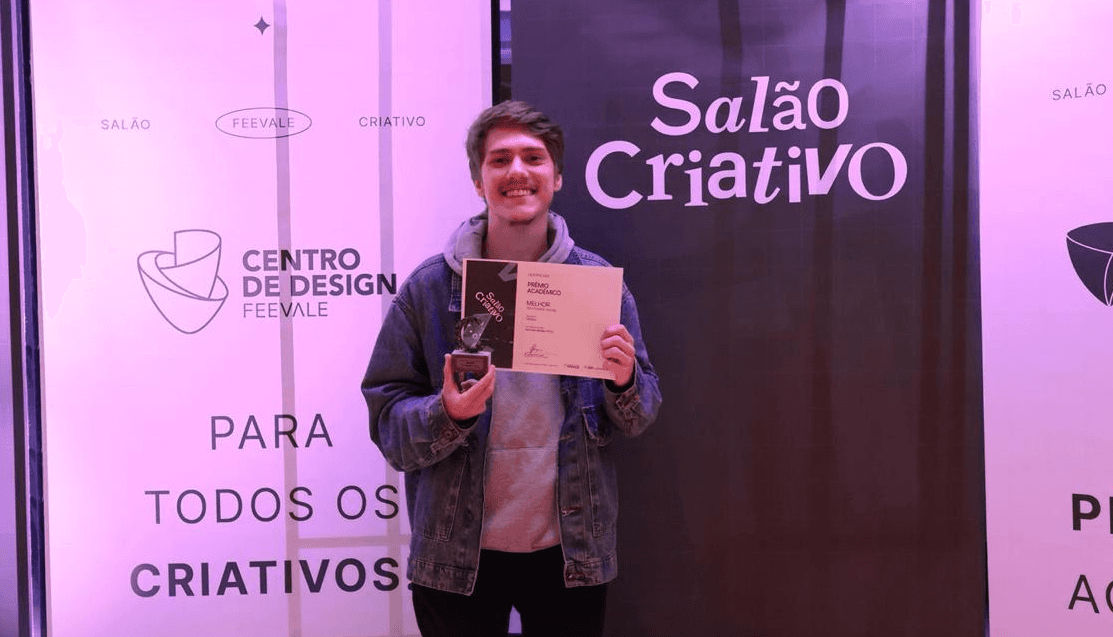
Takada won the academic prize for Best Visual Identity in Salão Criativo in 2026.